Washer Stuck On Spin? (Here's Why And How To Fix It)
There’s nothing more annoying than going to switch your laundry over and realizing your washer is still stuck spinning like it’s training for a marathon.
You stand there staring at it, waiting for it to magically stop, but nope, it just keeps going in circles.
The good news is this problem is way more common than people admit and usually comes down to a handful of simple things you can check at home.
Nothing complicated, nothing that needs special tools.
So before you imagine the worst or start pricing new machines, let me go over a few reasons why your washer gets stuck on spin and the easy fixes that actually work.
#1 Check The Load First
This is honestly the most common cause and the easiest to overlook.
Washers are a bit picky about balance. If your clothes are all clumped on one side or there’s one heavy item mixed with a bunch of light ones, the machine starts struggling to keep itself steady. It keeps trying to rebalance the drum and ends up stuck in a loop that feels endless.
Towels and blankets are usually the biggest troublemakers.
So open the washer, pull the clothes apart, move things around a bit, and see if the drum feels more balanced.
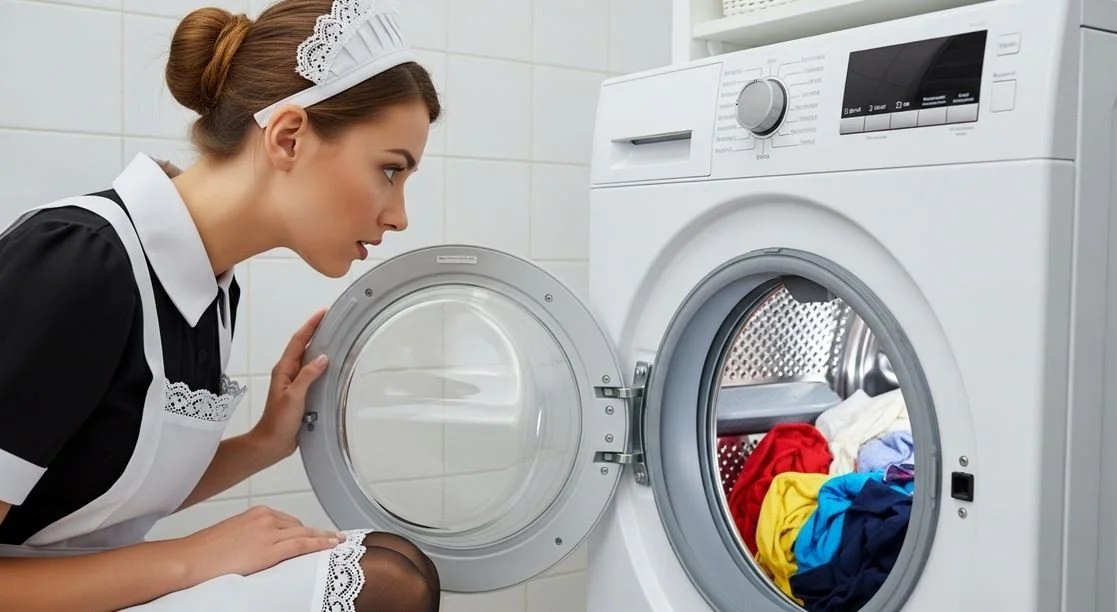
Sometimes you may even need to remove an item if it’s too heavy for the rest of the load. Once you’ve rearranged everything, close it back up and let it try again.
Also Read: Will Acetone Stain Clothes?
You’d be surprised how often this solves the whole situation without touching anything else.
#2 Make Sure The Door Or Lid Is Fully Closed
This sounds almost too simple to matter, but washers have sensors that need the lid or door fully locked before they continue through the cycle. If that latch is loose, dirty, or not clicked in properly, the washer kind of just sits there confused and keeps repeating the spin portion
On top-loaders, the lid switch is usually a tiny button under the lid.
If it’s worn out or not being pressed hard enough, the washer won’t move on.
Front-loaders rely on the door lock mechanism, and if that lock is faulty, it can cause all sorts of random hiccups like long spins, pauses, or that never-ending whirring sound
Give the door or lid a gentle push to make sure it’s actually sealed.
If you hear a solid click, that’s what you want. If it still doesn’t behave, take a quick look at the latch to see if anything is stuck in there like lint or a stray piece of fabric.
#3 See If The Washer Is Actually Draining
Your washer won’t finish spinning if the water inside isn’t draining out.
The whole idea of the spin cycle is to remove extra water from your clothes, so if the machine senses standing water, it keeps spinning in hopes of fixing it.
That means you could be watching it forever without any change
To check this, open the washer and see if there’s water sitting at the bottom. If there is, that’s usually a clogged filter, blocked drain hose, or just a pump that needs a little help.
Also Read: Left Clothes In Washer For Days
Most front-load washers have a drain filter behind a small panel near the bottom. Those things catch everything: coins, hairpins, lint clumps, even socks sometimes. Cleaning it out can make the washer work like new again
Top-loaders can also clog at the hose behind the machine. If you can safely pull the washer forward, you can make sure the hose isn’t kinked or blocked by gunk.
#4 Try A Quick Reset
It’s funny but washers glitch more often than people realize. Just like phones or Wi-Fi routers, sometimes they need a fresh start.
If the control board gets confused mid-cycle, it might keep the machine stuck spinning with no real end point. So before you assume something big is broken, try resetting it:
Turn the washer off
Unplug it for a couple of minutes
Plug it back in and restart a short cycle
This usually clears out whatever confusion the machine had and helps it reset all the sensors.
It’s the easiest test before jumping into more detailed troubleshooting and takes less than three minutes.
#5 Look For Error Codes
Most modern washers show an error code when something’s off, and these codes are gold when you’re trying to figure out what’s going on.
Even if you don’t know what they mean, they’ll point you in the right direction so you’re not guessing in the dark. You might see letters and numbers flashing or blinking lights in a pattern.
You can check your manual or look up the code with your model number.
They usually tell you if the issue is with the motor, the drainage, the door lock, or something simple like an overloaded drum.
If your washer doesn’t show codes, don’t worry, plenty of older machines still run great, they just don’t do the flashing-warning thing.
#6 When The Motor Or Belt Is The Problem
This is where things get a bit more mechanical, but still not impossible to understand.
If the washer starts spinning, slows down, stops for a second, then tries again in a weird slow loop, the motor might be overheating or the belt might be slipping.
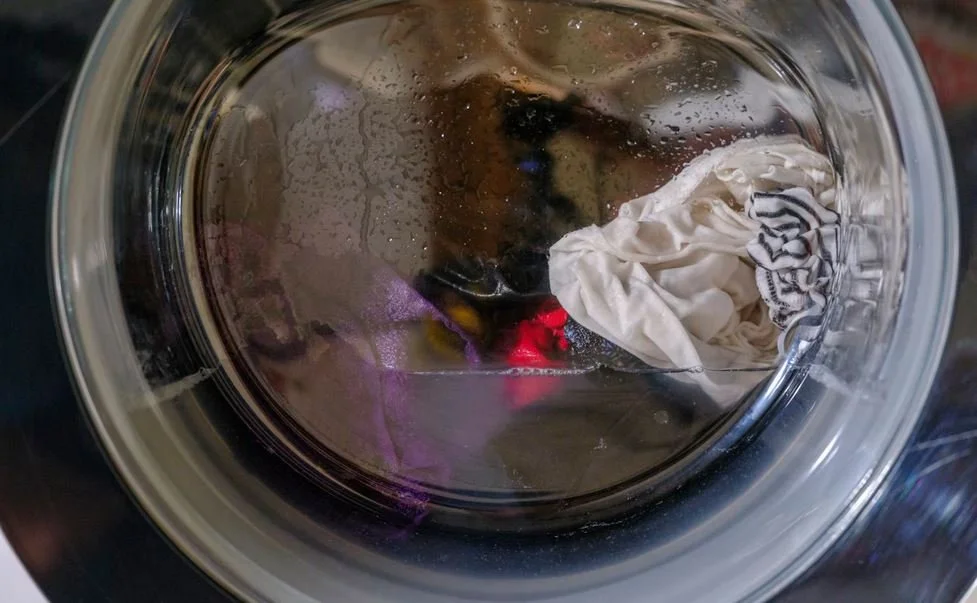
Belts can wear out over time and lose their grip. You might even hear a rubbery squeak or a faint burning smell when it happens
If the motor overheats, the washer usually shuts itself down mid-spin to protect the internal parts. It feels like it’s stuck, but in reality it’s pausing for safety. Giving it a 20 - 30 minute break can help, but if it keeps happening, a belt replacement or motor check is probably needed.
Also Read: Can You Use CLR On Dishwashers?
Both issues are fixable, though the motor is usually something you’d want a technician to handle unless you’re comfortable with repairs
DIY Fixes You Can Try At Home
You don’t need to be a tech wizard to do a few practical checks that solve a lot of these spin cycle problems. Here are some simple things you can do:
Rebalance the clothes inside the drum
Clean the drain filter or check the drain hose for clogs
Give the control board a quick restart with a power reset
These alone fix a big percentage of stuck spin issues, and none of them take more than a few minutes.
As long as you’re not opening up electrical parts or digging deep into wiring, it’s pretty safe and straightforward.
When You Should Call A Technician
Some issues just go beyond what you can handle without tools.
If the machine refuses to spin no matter what you try, the drum doesn’t move at all, the belt is obviously broken, or you’re getting error codes pointing to internal hardware problems, it’s time to call someone in.
Also, if you smell something burning or hear loud grinding or banging noises, don’t keep forcing the washer to run. Those are signs something inside is struggling.
A technician can check deeper issues like faulty motors, control boards, loose wiring, damaged sensors, or anything connected to the internal mechanism of the drum.
It’s just safer and honestly faster to let someone take a look if the easy fixes don’t change anything.
Bottom Line
Your washer could be stuck on spin because of something small like an unbalanced load, leftover water that needs draining, or the machine getting a little confused.
Start with the simple checks because they solve more issues than you’d expect and take almost no time.
If the washer still refuses to move on after all the easy fixes, that’s when a technician becomes the smarter option.
Bring Laundry Fixes Into a More Complete House Cleaning Routine
Karen's Green Cleaning provides house cleaning services to support the efforts of maintaining cleanliness in your laundry area as well as other parts of your home. While they provide daily cleaning for kitchen, floor, and general-use areas that are prone to accumulation (and therefore help with organization), their house cleaning services also prevent issues such as having your washer get stuck in the spin cycle. The benefit of using Karen's Green Cleaning Services will be that you will have an overall cleaner house while your maintenance routine remains uninterrupted.