Can You Use CLR On Dishwasher? (Guide)
If you’ve ever opened your dishwasher and noticed white spots, chalky buildup, or even a hint of rust, you know how frustrating it can be.
Hard water and minerals love to leave their mark, and it’s tempting to reach for something strong like CLR to clean it up. It’s a strong cleaner designed to zap calcium, lime, and rust, so it seems like a natural choice.
But is pouring a chemical like that into your appliance safe?
Will it clean without causing damage?
In this guide, I’ll explain if you can use CLR on dishwashers, show you how to use it safely if you choose to, and share some gentler alternatives.
Is It Safe To Use CLR On A Dishwasher?
Yes, it's safe to use CLR on a dishwasher, but you have to be cautious.
CLR is effective on hard water deposits and rust, but it’s also acidic and strong. That means it can be rough on certain dishwasher parts if it’s used too often or in the wrong way.
Rubber seals, hoses, and some plastics may degrade over time if exposed all the time.
If the dishwasher has protective coatings (on the tub or racks), CLR could degrade them too.

Oh and before using CLR, it’s smart to check the dishwasher manufacturer’s instructions. Some brands discourage any chemical descaler that isn’t specifically made for dishwashers. Using CLR against those instructions could void your warranty, and that’s a headache no one wants.
Also Read: Is CLR Septic Safe?
That said, using CLR once in a while to remove stubborn buildup is generally fine. Frequent use or pouring it in at full strength can be risky though.
How To Use CLR On A Dishwasher?
If you’ve weighed the risks and still want to give it a go, here’s a step-by-step (loosely based on CLR’s own instructions) on using CLR in your dishwasher.
Note: Use at your own discretion, and check your appliance manual first:
#1 Empty The Dishwasher Completely
Before you even think about adding CLR, make sure the dishwasher is totally empty. Take out plates, glasses, utensils, and any removable racks if your model allows it.
CLR should never touch items you eat from, so clearing everything out is important.
An empty space also lets the solution reach the spots that usually collect buildup, like around the drain, the heating element, and the spray arms.
It’s a small step, but it sets you up for a cleaner, smoother cycle.
Also take a moment to inspect the dishwasher. If you see any particularly stubborn deposits, note where they are. These areas will benefit most from the CLR treatment.
Also Read: What Should You NOT Use CLR On?
#2 Dilute CLR As Per Instructions
CLR is highly concentrated and should never be used full-strength in a dishwasher. Always dilute it according to the instructions on the bottle.
Usually, this involves mixing a small measured amount with water in a separate container.
Proper dilution ensures that the solution is strong enough to dissolve mineral deposits but gentle enough to avoid damaging rubber, plastic, or metal components.
Don’t guess the amount; using too much can increase the risk of corrosion, while using too little might not be effective.
So take the time to mix it accurately!
#3 Add CLR Solution To The Bottom Of The Dishwasher
Once diluted, pour the CLR mixture into the bottom of the dishwasher.
The lower area of the machine is where water collects and mineral deposits tend to form, so placing the solution here maximizes contact with the areas that need cleaning most.
Try to avoid spilling it directly onto rubber seals if possible.
A little contact won’t instantly ruin them, but direct exposure over time can weaken rubber components.
Focus on getting the solution near the drain and heating element, since those are common trouble spots for limescale buildup.
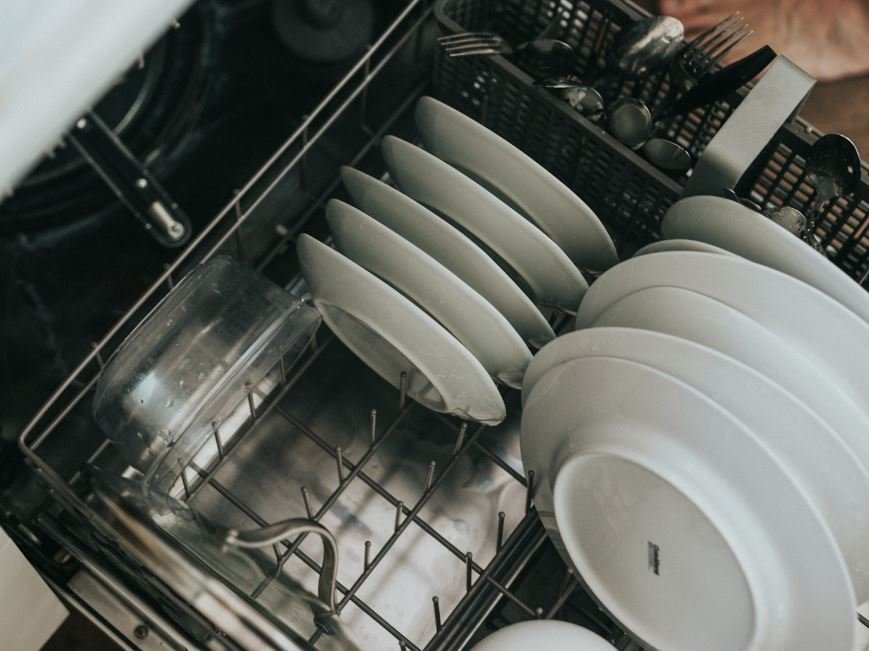
#4 Run A Short Hot Water Cycle Without Detergent
After adding the CLR solution, run a short, hot water cycle. The heat helps the solution dissolve calcium, lime, and rust more effectively.
Skip adding any detergent during this cycle; you don’t want the chemicals interacting or creating foam inside the dishwasher.
Also Read: CLR Alternatives To Remove Rust
The circulation of hot water moves the solution through the spray arms and around the interior, loosening deposits that may have built up over time.
This one cycle is usually enough to cut through the mess.
#5 Rinse Thoroughly With 1–2 Water-Only Cycles
Once the CLR cycle is done, rinsing is the big non-negotiable step.
Run at least one, or ideally two, plain water cycles to clear out anything left behind.
You don’t want the smell, taste, or residue of CLR sticking around. Rinsing also protects the internal parts of your dishwasher from any leftover acidity.
After this, your dishwasher will be ready for normal use again.
Other Alternatives To Clean Dishwashers
CLR is great, but it’s not the only way to keep a dishwasher sparkling. Sometimes gentler solutions are better, especially for regular maintenance.
Here are a few things we recommend:
White vinegar helps break down minor mineral deposits and freshens the inside
Citric acid removes limescale and tackles dull white film from hard water
Dishwasher-safe descalers clean buildup safely and protect internal components
These choices are safer for rubber seals, coatings, and plastic parts, and they’re great for regular monthly cleaning or lighter buildup. They’re easy to use, affordable, and won’t interfere with warranties.
Bottom Line
You can use CLR on dishwashers, but it must be used carefully. Dilute it properly, follow the step-by-step instructions, and rinse thoroughly afterward. And always keep your dishwasher manufacturer’s guidelines in mind, and avoid repeated use on delicate parts.
If you’re hesitant or want a gentler approach, vinegar, citric acid, or a dishwasher-safe descaler can do the job too.
The goal is a clean, happy dishwasher that keeps your dishes sparkling without damage.
A little attention and regular maintenance go a long way. Treat your dishwasher well, and it will return the favor with clean dishes, fewer deposits, and a longer lifespan.
Choose The Best Option For Your Dishwasher And Your Home
As you consider if you can use CLR with your dishwasher, you will want to choose products that help protect your appliance from damaging issues that may arise from using such a product. Similarly, at Karen's Green Cleaning, we provide the same attention to detail when cleaning homes. We offer professional house cleaning services to ensure all parts of your kitchen, floors and living spaces are maintained as clean as possible. Our staff are trained to handle many of the details of maintaining a clean home which ultimately leads to a cleaner home and one that is easier to live in. At Karen's Green Cleaning, we strive to give you confidence in each cleaning decision you make and allow you to maintain a continually clean home.