Does Coolant Stain Concrete? (Solved)
If you’ve ever walked into your garage and spotted a weird green, orange, or pink puddle under your car, you probably already know what it is. Coolant.
And right after that comes the next thought:
“Uh oh… is that going to stain my concrete?”
Short answer: yeah, it can. Longer answer: it doesn’t always have to be a permanent disaster.
In this post, I’ll explain how coolant stains concrete, how the stains look, and how to get rid of these stains like a PRO.
Can Coolant Stain Concrete?
Yes, coolant can stain concrete, and it does it more easily than most people expect.
Concrete might look solid and tough, but it’s actually pretty porous. Think of it like a sponge made of stone. When liquid hits it and sits there, especially something like coolant, it doesn’t just hang out on the surface. It seeps in.
Coolant, also called antifreeze, is designed to move heat, resist corrosion, and last a long time inside an engine. That also means it doesn’t evaporate quickly.
When it leaks onto concrete and isn’t cleaned right away, it has plenty of time to soak in and leave a mark behind.
Also Read: How To Clean Cat Pee On Concrete
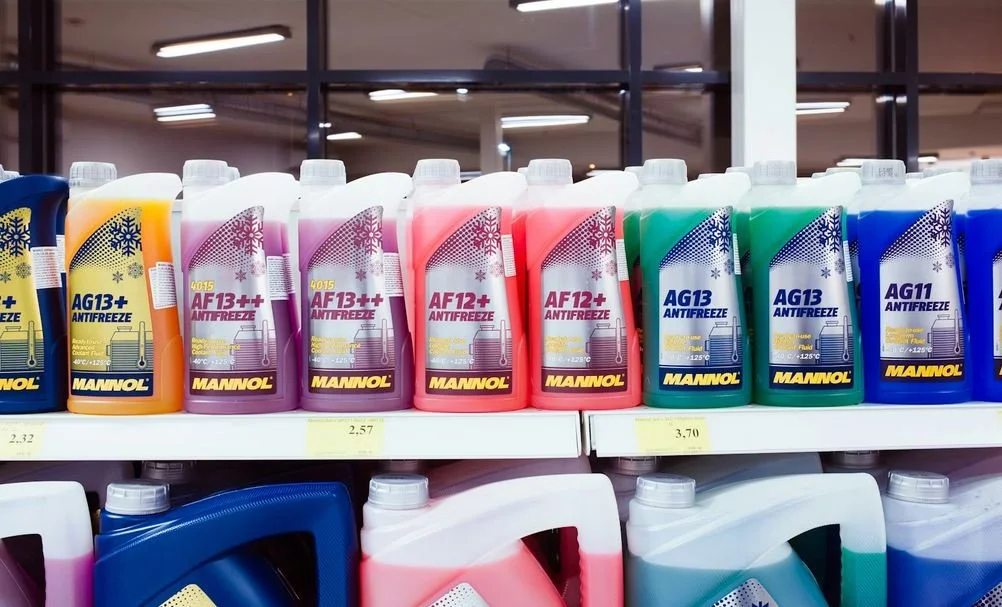
Fresh spills are usually no big deal if you catch them early.
Older leaks, slow drips, or puddles that baked in the heat for days or weeks are another story. Those are the ones that tend to leave stains that make you sigh every time you walk past them.
What Coolant Stains Look Like On Concrete?
Coolant stains don’t always look dramatic at first. Sometimes they’re subtle, which is why people ignore them until it’s too late.
Most commonly, you’ll see:
Pale green, orange, pink, or yellow discoloration (depending on the coolant color)
Darkened damp-looking spots that don’t fully dry
Slightly sticky or slick residue even after the spill is wiped up
The color might look faded or washed out compared to the original liquid, but it’s still noticeable against gray concrete.
On older concrete, stains often spread out instead of staying in a neat circle. The coolant follows tiny cracks and pores, creating uneven edges that make the spot look bigger than the original spill.
Also Read: How To Clean Bird Poop Off Cement
Are Coolant Stains Permanent?
Not always, but sometimes they can be stubborn.
If the spill is fresh and hasn’t had much time to soak in, there’s a very good chance you can clean it up completely. Older stains can still be improved a lot, even if they don’t vanish 100 percent.
Permanent staining is more likely when the coolant sat for a long time, the concrete is unsealed, or the spill happened during hot weather.
Heat opens up the pores in concrete, which lets liquids sink deeper.
Once the coolant is down there, surface cleaning becomes less effective.
That said, “permanent” doesn’t always mean “hopeless.” Many stains fade enough that you stop noticing them unless you’re actively looking for them.
How To Remove Coolant Stains From Concrete
Cleaning coolant stains isn’t complicated, but it does require a little patience. This is not a one-swipe-and-done situation, especially for older spots.
Here’s what to do:
#1 Blot First
If the spill is fresh, grab paper towels, rags, or even kitty litter and blot up as much liquid as possible.
Don’t wipe it around. Wiping spreads the coolant and pushes it into more pores. Blotting pulls it up.
Even if the stain is older, it’s still worth starting by removing any residue sitting on the surface.
The cleaner the area is before you scrub, the better your results will be.
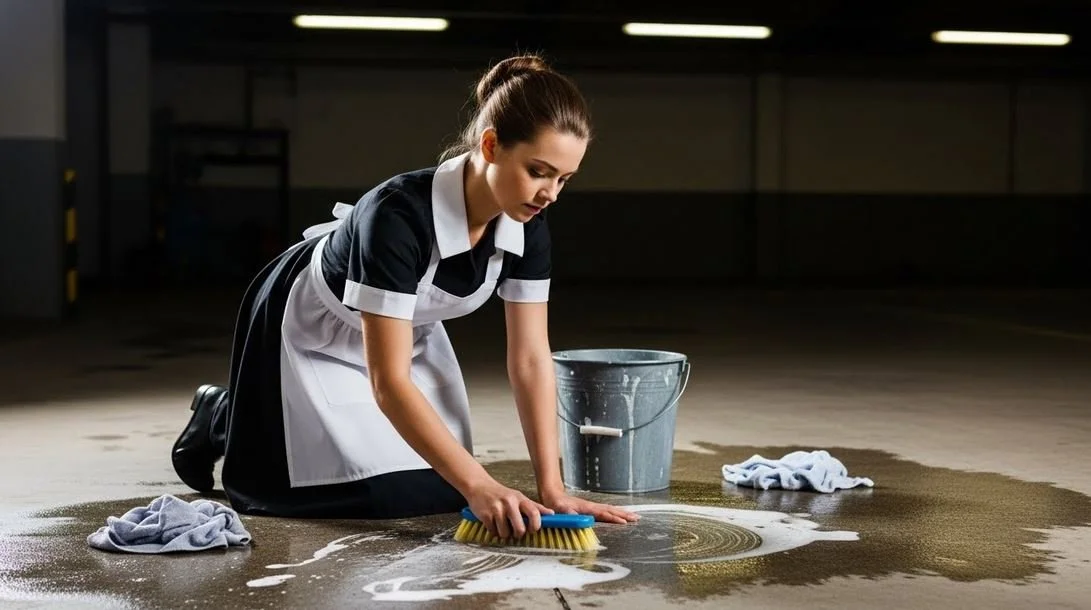
Also Read: How To Remove Water Stains On Concrete
#2 Hot Water + Dish Soap
This combo handles a surprising number of coolant stains, especially newer ones.
Dish soap is designed to break down slippery residues, and coolant definitely qualifies.
Here’s what to do:
Pour hot water over the stain, add a generous squirt of dish soap, and scrub with a stiff brush. You don’t need anything fancy here. A basic scrub brush works fine. Avoid wire brushes, since they can scratch the concrete and make future stains worse.
Scrub in small circles, let the soap sit for a few minutes, then rinse with more hot water.
You should see the coolant stain on concrete gone.
#3 Try A Concrete Degreaser Or Oxygen-Based Cleaner
If dish soap doesn’t cut it, move up to a concrete degreaser or an oxygen-based cleaner.
These are made to penetrate porous surfaces and lift out stubborn residues.
Apply the cleaner according to the instructions, let it sit for the recommended time, and scrub again. This is where patience pays off. Rushing usually just leaves you frustrated and staring at the same stain afterward.
#4 Rinse Thoroughly
Rinsing matters more than people think.
Leftover cleaner can attract dirt, which makes the area look stained again even if the coolant is gone.
Use plenty of clean water and make sure everything is flushed out of the concrete.
A garden hose works well for outdoor areas. Indoors, multiple buckets of clean water usually do the trick.
#5 Repeat If Needed
Most coolant stains don’t disappear after one round, especially if they’ve been there a while.
Let the concrete dry completely and check the results. If the stain is lighter but still visible, repeat the process.
Each round usually pulls a little more coolant out of the concrete.
Progress is progress, even if it’s slow.
What Not To Use On Coolant Stains
It’s tempting to throw the strongest thing you own at the stain and hope for the best, but that can backfire.
Bleach is a big one to avoid. It doesn’t break down coolant very well and can actually discolor concrete, leaving you with a different kind of stain. Acidic cleaners like vinegar might lighten the surface but can also etch the concrete and make it more porous over time.
Abrasive tools, like metal scouring pads or grinders, can rough up the surface. That damage makes future stains sink in even faster, which is the opposite of what you want.
Also, don’t mix cleaning chemicals. That’s not just bad for the concrete, it can be dangerous for you.
Bottom Line
Coolant can stain concrete, but it’s not an automatic life sentence for your garage floor or driveway. The faster you act, the easier it is to clean.
Even older stains usually respond to a little patience and the right cleaning approach.
Most of the time, you can lighten or remove the stain enough that it stops being an eyesore.
And if you want to avoid dealing with it again, sealing your concrete or using a drip pan under your car can save you a lot of future frustration.
Spills happen. Leaks happen. Concrete doesn’t have to look terrible forever because of them.
Before You Walk Away From That Coolant Stain
When you allow coolant to leak into a slab of concrete (and there are many ways this can happen) it may stain or discolour the area permanently if it is not addressed at the time of spill. Karen's Green Cleaning provides extensive cleaning options for stained or dirty concrete and has options that will improve the health of your indoor space. The cleanliness of all aspects of your property will help reduce build up and prevent staining of the surfaces; which in turn helps to create a cleaner and a more comfortable place to live. With Karen's Green Cleaning, your home will be clean and well-maintained from top to bottom.