Can You Mix Dish Soap And Vinegar? (Guide)
If you’ve ever scrolled through cleaning hacks online, you’ve probably bumped into the classic “dish soap + vinegar” duo popping up in every corner of the internet.
People swear by it for showers, sinks, greasy pans, and all the random little messes that make you sigh before grabbing a sponge.
It’s one of those combos that seems almost too simple to take seriously, yet you keep hearing about it from friends, TikTok videos, and those Pinterest graphics that look way too perfect.
At some point you start thinking, alright, what’s the deal with this stuff and does it actually work as well as everyone claims.
Spoiler alert: IT DOES! You can mix dish soap and vinegar, and it works great.
In this post, I’ll explain what happens when you mix dish soap and vinegar, why people love this, and even share a recipe.
What Happens When You Mix Dish Soap And Vinegar
Dish soap and vinegar look simple on their own, but together they make a pretty cool team.
Vinegar brings in acidity that loosens up soap scum, mineral deposits, and that cloudy build-up that collects on bathroom surfaces.
Dish soap steps in with its grease-cutting powers and its ability to cling to surfaces long enough to actually lift grime instead of sliding right off. It’s almost like vinegar softens the mess and the soap pulls it away.
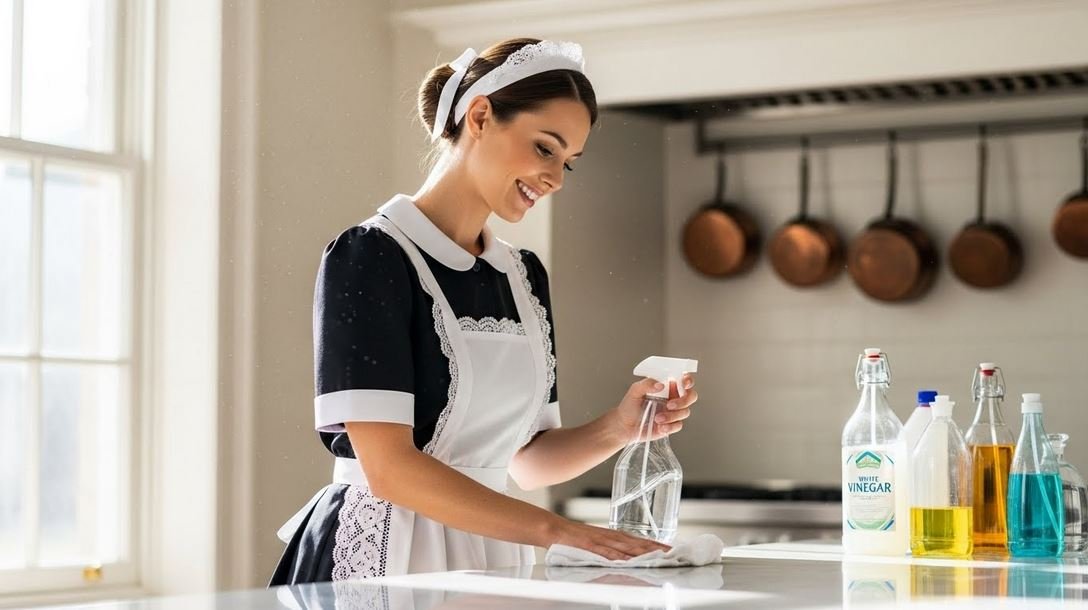
When you mix them, the texture also changes. Vinegar is thin and runny. Dish soap is thicker.
Once combined, you get something in the middle that spreads easily but still stays on surfaces just long enough to do its job.
Also Read: Can You Mix OxiClean And Vinegar?
The mix tends to foam a bit too, which weirdly helps you see where you’ve sprayed.
That cling factor makes it especially good for vertical spaces like shower doors or tile walls where regular cleaners just drip instantly.
Is It Safe To Mix Dish Soap And Vinegar?
Yes, it’s safe to mix vinegar and dish soap.
Nothing risky happens when you mix basic dish soap with vinegar. They don’t create harmful fumes and they don’t react in a way that damages surfaces unless the surface itself is sensitive to acids.
The only thing you absolutely need to be careful about is keeping this mixture far away from bleach.
Vinegar and bleach together create dangerous chlorine gas, and that is not something you want floating around your home while you’re trying to clean your shower.
As long as your dish soap doesn’t include bleach and you’re not layering this mixture over a surface that was just cleaned with a bleach-based product, you’re totally fine.
Most regular dish soaps are bleach-free anyway, so it’s not something that pops up often, but it’s still something worth noticing because it matters.
Other than that, it’s harmless and easy to use in day-to-day cleaning.
Also Read: How To Remove Hair Dye From Counters
Why People Love This Combo
People love this mixture for the same reason they love any DIY cleaner that actually performs. It’s cheap, easy to put together, and super versatile.
Plus, you usually already have both ingredients sitting in your kitchen cabinet, so there’s no extra shopping trip involved
It’s also one of those cleaners that feels satisfying to use because you actually see a real difference. Shower doors suddenly look clearer. Sinks look brighter. That stubborn film on your tub lifts off without endless scrubbing.

It gives you that tiny burst of “wow I did something productive today” with minimal effort.
And honestly, that feeling alone is worth a lot on a day when motivation is running low.
Here are a few things people appreciate the most
It cuts through grime without needing a ton of elbow grease
It sticks to vertical surfaces better than vinegar alone
It works for bathrooms, kitchens, and dishes with baked-on grease
It’s the kind of cleaner that becomes a go-to once you try it and realize how many annoying cleaning jobs it can handle.
When You Shouldn’t Use This Mixture
Even though it’s pretty versatile, this mixture doesn’t belong on every surface.
Vinegar is acidic, and acids don’t get along with certain materials.
Natural stone surfaces like granite, marble, quartzite, or travertine should be kept far away from any vinegar based cleaner. The acid can slowly eat away at the finish and leave dull marks that won’t buff out easily.
Waxed furniture or floors also aren’t a good idea because acidity disrupts the wax layer.
Anything with a protective coating that isn’t acid-friendly should be cleaned with something neutral instead.
Electronics, phone screens, and anything with an anti-glare or special coating also don’t pair well with vinegar, so keep the mixture away from those too.
As long as you avoid these sensitive areas, the mixture is pretty safe for most day-to-day cleaning tasks.
DIY Dish Soap + Vinegar Cleaner Recipe
Making your own cleaner literally takes a minute. You don’t need any fancy ratios, measurements, or equipment.
It’s as straightforward as it gets and still gives you surprisingly strong cleaning power:
1 cup white distilled vinegar
1 cup dish soap
Warm the vinegar slightly for easier mixing
Combine in a spray bottle and swirl gently to blend
Once you’ve mixed it, you can adjust the consistency depending on how you like it. If you want something thicker that clings more, add a little extra dish soap.
If you want it thinner for quick wipes or non-sticky surfaces, add more vinegar.
Also Read: Worst Laundry Detergents For Septic Systems
Store it at room temperature, and give the bottle a light shake before each use since it can separate a bit over time.
Final Thoughts
Mixing dish soap and vinegar is one of those simple cleaning tricks that actually lives up to the hype. It’s safe, easy, budget-friendly, and surprisingly strong for everyday messes.
As long as you keep it away from bleach and acid-sensitive surfaces, it becomes a handy little cleaner to keep around.
It gives you big results with small effort, and honestly, that’s all you really want on cleaning days.
If you’ve been debating giving it a try, this is your sign to mix a small batch and test it out. Chances are it’ll end up becoming one of your go-to cleaners in no time!
Before You Try Another DIY Solution Again
It may be easy to mix baking soda or dish soap with vinegar. But, when it comes down to getting rid of dirt and grime over time, the key is consistency in maintaining cleanliness throughout the house. Karen's Green Cleaning provides dependable cleaning service options, which can help you to address build up of dirt and grime, especially in kitchens, bathrooms and general living spaces. When you develop an organized cleaning schedule, it will become easier for you to maintain a cleaner and better kept home without wondering about using different household cleaners.