Bathtub Stains Won’t Come Out (Here's What To Do)
Keeping a bathtub clean sounds simple until you’re standing there staring at a stain that refuses to move no matter how much you scrub.
It might even feel like the stain digs its heels in deeper every time you try to clean it.
The truth is most stains have a cause and once you figure out what type of mess you’re dealing with, the whole process becomes so much easier. You don’t need harsh chemicals or hours of scrubbing, you just need the right method.
In this post, I’ll show you how to get rid of bathtub stains that won’t come out.
What Kind Of Stain Is It?
Before grabbing every cleaner in sight, take a quick look at what type of stain you’re dealing with.
Hard water usually shows up as chalky, yellowish or whitish patches that feel rough when you touch them. Soap scum looks cloudy or filmy, like a thin plastic layer sitting on top of the tub. Rust gives you those orange or reddish spots, often from old pipes or metal cans left on the bathtub edge.
Then you’ve got the old, deep stains that look like they’ve lived there for years and absolutely refuse to lift.
And there are some marks that are actually damage to the tub’s surface, not stains at all, especially in older enamel or acrylic tubs. When that happens, cleaning won’t fix it because the finish is worn out, not dirty.
Also Read: Can You Use Toilet Bowl Cleaner In The Tub?
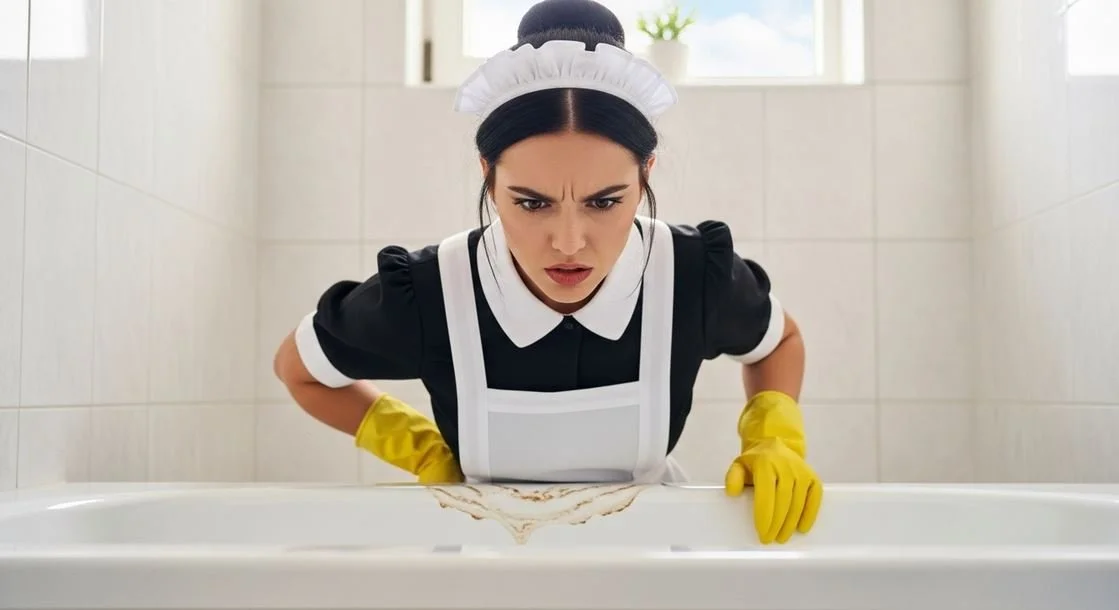
But for most everyday stains, once you identify the type, things get much easier and you can move straight into the right method instead of wasting energy on trial and error.
How To Remove Bathtub Stains That Won’t Come Out
Once you know what you’re dealing with, life gets so much easier. Each stain responds best to a certain approach and when the method actually matches the problem, the cleaning becomes a whole lot less painful.
Here’s how to remove those bathtub stains:
#1 Baking Soda Paste
Baking soda paste is one of those cleaning tricks that feels almost too simple but somehow works better than half the fancy products on the shelf.
Mixing baking soda with a bit of dish soap gives you a thick, gritty paste that sticks to the stain instead of sliding off the tub, which already makes cleaning easier.
The paste softens layers of soap scum, body oils, and old residue that collect over time, especially in tubs used daily. Once it sits for a little bit, you don’t have to scrub like you’re polishing a car, the grime loosens up and starts lifting with just a bit of effort.
It’s gentle on most surfaces, cheap, easy to make, and honestly one of the best starting points when a stain looks stubborn but not impossible.
Also Read: What NOT To Use On Acrylic Tubs
#2 Vinegar Soak For Hard Water
Hard water stains can make even a new bathtub look worn out because minerals stick like glue and build up faster than you expect.
Vinegar works so well for these stains.
This is because it cuts through that mineral crust and slowly dissolves the hardened layer instead of just pushing it around.
Letting vinegar sit on the stain gives it time to break things down, and you’ll usually feel a difference once you touch the surface, it goes from gritty and rough to smoother and lighter.
Pairing it with baking soda adds that satisfying fizz that helps lift stubborn bits stuck in small crevices.
It’s an easy routine fix for anyone dealing with hard water and it instantly makes the tub look fresher without hours of scrubbing.
#3 Magic Eraser
A magic eraser is great for stains that feel like they’ve bonded with the tub at a molecular level.
It works with a micro-abrasive texture that gently sands away grime, old residue, scuff marks, dye transfers, mystery streaks, and those weird grey smudges that cleaners just glide over.
You barely need pressure, just steady strokes, and the eraser does most of the job while you watch the stain lighten with each pass.
Also Read: Can You Use Magic Eraser On Quartz?
It’s especially helpful for tubs that haven’t been deep cleaned in a while or for marks left behind by kids’ bath toys, bath products, or simply years of use.
It’s portable, affordable, and often the thing that finally solves a problem you’ve been staring at for weeks.
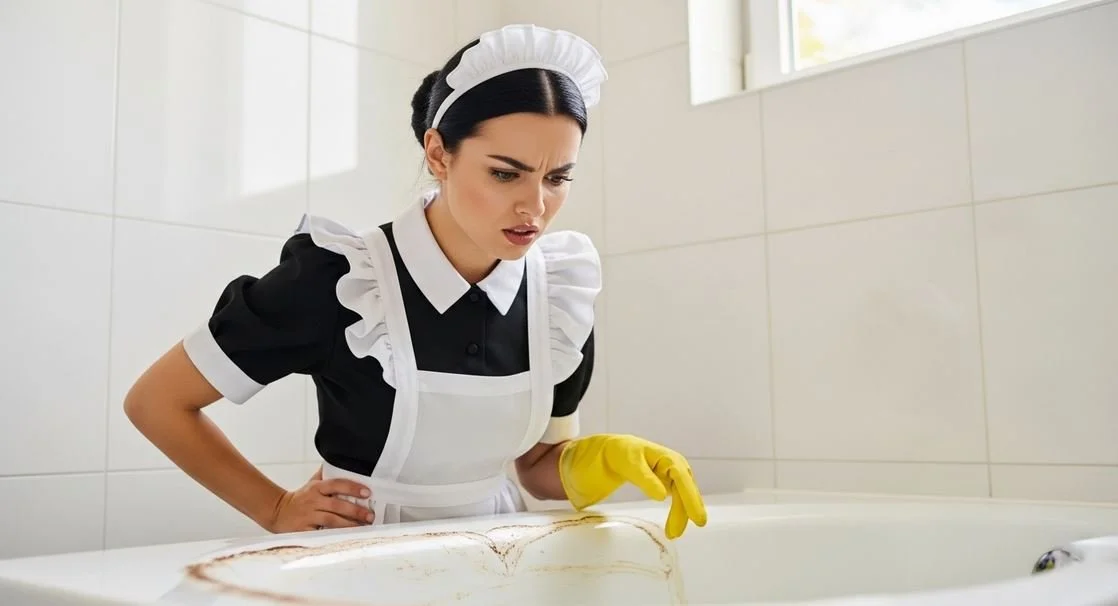
#4 Lemon + Salt
Rust stains can be incredibly annoying because they look dramatic with those deep orange tones and no amount of regular cleaner seems to touch them.
Lemon and salt together create a simple but surprisingly effective combo that targets rust without damaging the tub.
The salt gives you a soft abrasive texture that helps loosen the stain while the lemon juice works on breaking down the rust at the surface.
When the mixture sits for a bit, the stain starts fading and scrubbing becomes so much easier.
It’s great for rust marks left behind by metal cans, old razor holders, or even tiny drips from rusty pipes, and it’s one of the easiest natural approaches when you want results but don’t want to deal with heavy chemical fumes.
When To Call A Pro
Sometimes the stain isn’t a stain at all.
If the tub surface looks patchy, discolored, worn out, or rough even after cleaning, that’s usually damage to the finish. No amount of scrubbing can fix a surface that has lost its coating.
That’s when calling a professional makes sense because they can reglaze or refinish the tub and bring it back to life.
It’s also smart to get help if rust keeps returning or the stain seems to come back fast because that hints at a deeper issue, often inside the plumbing.
A pro can fix the source so you’re not cleaning the same thing forever.
Special Cases People Miss
Bathtub stains show up for all sorts of sneaky reasons.
Metal shaving cream cans or shampoo bottles can leave rust rings even if they were there for a short time. Hair dye splashes can create pink, purple, or blue marks that need specific cleaning to lift. Mold can hide in small corners and look like a stain even though it’s actually growth, not residue.
Some water supplies have iron or minerals that slowly tint the tub over time.
Older tubs can also lose their enamel and look stained even when they’re not dirty at all.
It helps to pay attention to tiny habits, like what you store on the bathtub edge or how often the tub gets rinsed after use.
Bottom Line
Stains that won’t come out can make cleaning feel endless but most of them can be removed once you match the cleaning method to the stain type.
Baking soda paste handles everyday grime, vinegar works wonders on hard water, lemon and salt deal with rust, and magic erasers handle tricky older marks that nothing else seems to touch.
If nothing changes even after all that, your tub probably needs refinishing instead of cleaning.
Once everything’s sorted, maintaining the tub becomes so much easier and it won’t feel like a constant uphill battle every time you want it to look clean again.
When Stains Won’t Budge, It’s Time for a Better Approach
When your tub stains do not disappear after using typical cleaning techniques, then you have tried to remove them by yourself, and now is the time to contact a professional. Karen's Green Cleaning uses a more aggressive approach that will remove even the most difficult dirt and grime from your surfaces, but with an emphasis on protecting your surface quality. They offer more than just bathroom cleaning services, they provide whole-house cleaning services as well. At Karen's Green Cleaning, we use our knowledge and experience to ensure that every area of your home stays clean and free of unwanted dirt and grime.